
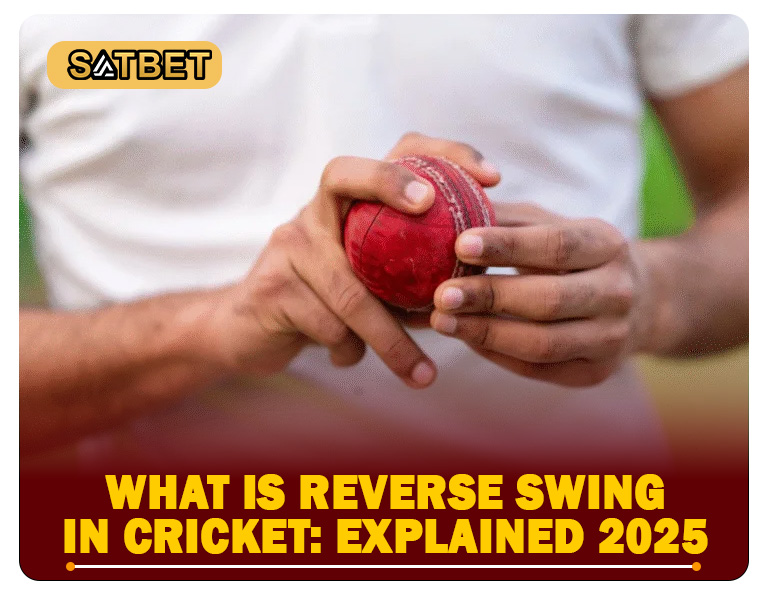
What Is Reverse Swing in Cricket: Explained 2025
Published on December 3, 2025
Many new fans often ask, what is reverse swing in cricket, because it looks confusing at first sight. The ball suddenly moves late, and the batter seems totally shocked. Moreover, this technique is seen mostly in long Test matches where the ball gets really old. It does not behave like a normal swing. However, this is why fast bowlers still love using reverse swing even in 2025. It brings back balance in batting-dominated games and keeps the contest fair.
Short History and How It Started
Pakistan was the home of this magic in the 1970s. Sarfraz Nawaz first used it properly. Later, Wasim Akram and Waqar Younis turned it into a nightmare for batters. Additionally, bowlers from other nations slowly learned this art. Back then, even top cricket experts were confused and asked what is reverse swing in cricket because it looked like a secret trick. Now it is a respected and scientific skill. Even commentators talk about it with huge excitement today.
Simple Physics Behind It
To really understand what is reverse swing in cricket, we must talk about airflow. One side of the ball is shiny and the other becomes rough. Therefore, when the bowler releases it fast (almost 140 km/h or more), the air reacts differently. Meanwhile, the ball moves toward the rough side. This is opposite of conventional swing, which usually moves toward the shiny side. Because the movement happens late, the batter gets less time to react and gets out bowled or LBW quite often.
Conditions That Allow Reverse Swing
The ball must get older — around 30 to 40 overs old. Moreover, pitches in India, Pakistan, UAE, and Australia with dry surfaces help one side rough faster. Bowlers legally shine one side using sweat or trousers. However, due to new ICC rules, using saliva is banned. Furthermore, pace and seam control are two huge requirements. Coaches in 2025 always train young bowlers by explaining what is reverse swing in cricket and why patience is required to execute it.
When Reverse Swing Dominates the Match
Reverse swing is a late-game weapon. Additionally, this technique gives fast bowlers hope when the pitch looks dead. Also, ODI and T20 death overs sometimes show reverse swing if the pitch is dry enough. Players like Bumrah, Shami, Starc, and Shaheen Afridi are currently known for it. They can suddenly break partnerships and change match situations within a spell of just two overs.
Key Facts Table of what is reverse swing in cricket
Best Reverse Swing Legends
Every time people discuss what is reverse swing in cricket, Wasim Akram’s name comes first. He was unreal. Waqar Younis also terrified batters with toe-crushing yorkers. Moreover, England enjoyed huge success in the 2005 Ashes because Flintoff and Simon Jones used reverse swing beautifully. In today’s time, Bumrah and Shami give India the strongest late-overs threat. Therefore, mastering reverse swing means becoming one of cricket’s smartest bowlers.
Modern Evolution (2020–2025 Updates)
The reverse swing did not go away. Instead, it became more scientific. Also, ball-tracking tools like Hawk-Eye helped bowlers improve seam angles. Meanwhile, the ban on saliva made it a bit harder. But bowlers adapted quickly. Furthermore, fast bowlers like Mark Wood, Pat Cummins, and Shami deliver quick speeds that assist the effect. In 2025, teams carefully plan when to start hunting wickets using their reverse-swing ace bowlers.
Batting Techniques to Survive Reverse Swing
Batters hate this phase of the game. They must judge the ball late. Therefore, coaches suggest they keep the bat close to the pad and play straight. Also, noticing the shiny side is a good clue. However, reverse swing is too unpredictable sometimes. Even legends like Kohli or Smith have played awkward shots against it. It is fair to say, skillful reverse swing can make champions look ordinary.
Why Reverse Swing Is a Smart Weapon
Reverse swing forces batters to think twice about every shot. Moreover, it gives bowlers a psychological advantage. The game becomes tense and exciting. Additionally, captains feel confident again when the ball starts reversing. Scoreboard pressure suddenly increases. Therefore, the beauty of reverse swing is not only physical movement but also mental impact.
Read More: How Many Cricket Stadium in Australia? Updated 2025 Guide
Conclusion – The Art Lives On
We now finally understand what is reverse swing in cricket and why bowlers care about it so much. It survived through changes in rules, technology, and tough batting conditions. Moreover, young cricketers dream to master it because it makes them dangerous and respected. Also, fans love the thrill it creates in Test cricket. Therefore, the art of reverse swing will stay alive forever as long as cricket loves fast bowling intelligence.
FAQs
Q1. What is the difference between reverse swing and normal swing?
Normal swing follows the shiny side, but reverse swing moves toward the rougher side at high speed.
Q2. Who is the reverse swing king?
Wasim Akram is mostly called the king of reverse swing by fans and experts.
Q3. Is reverse swing cheating?
No, it is legal if bowlers maintain the ball naturally without unfair tampering.
Q4. What causes a reverse swing?
A shiny side + a rough side + high pace create the aerodynamic imbalance.